The Little Dreamers Nursery
The best british nursery in Dubai Jumeirah 3The Little Dreamers Nursery
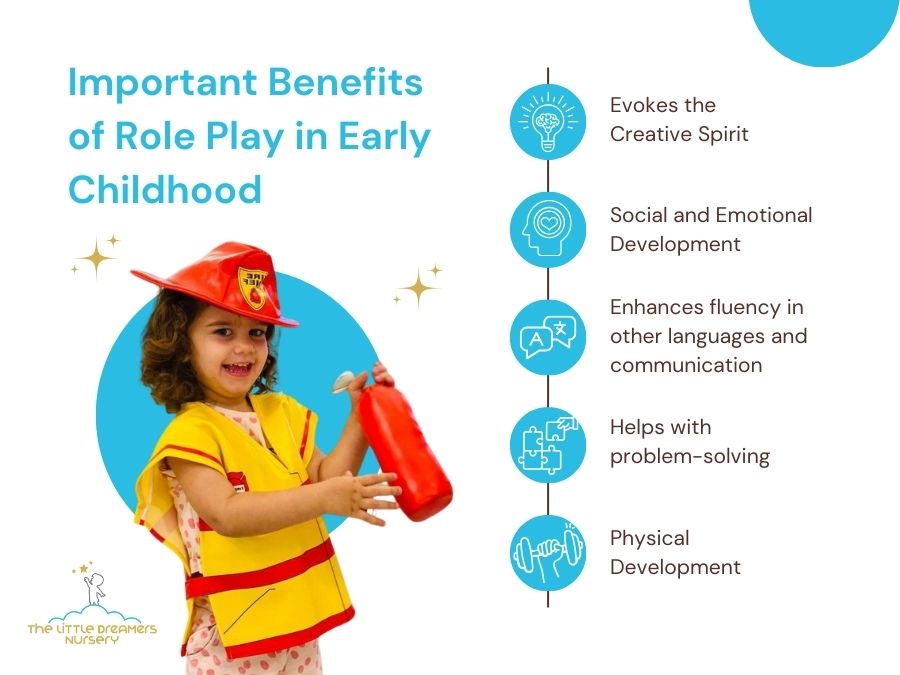
The best british nursery in Dubai Jumeirah 35 Important Benefits of Role Play in Early Childhood
Importance of role play in early years
Children gain a lot from the benefits of role play; role play fosters children’s self-esteem, creativity, communication skills, physical development, and ability to solve problems. It’s a good way for children to get into character, act out real-life or imaginary performances, and have a lot of fun. It’s all up to the children, and it’s a great way to get them excited about taking risks and being creative in their roles. It’s a fun method for children to learn about many professions and everyday circumstances by using themed props and equipment. Let’s take a look at the many benefits of role play in early childhood and what role play is and its importance.
According to researchgate.net:
“role play also helps children to learn the positive and negative impact of actions that they take. This means that when children act out real life scenarios they can choose how to respond and experience, in a playful environment, how different people would react. This is important for their development because it builds their social and problem solving skills.”
How does role play help a child’s development?
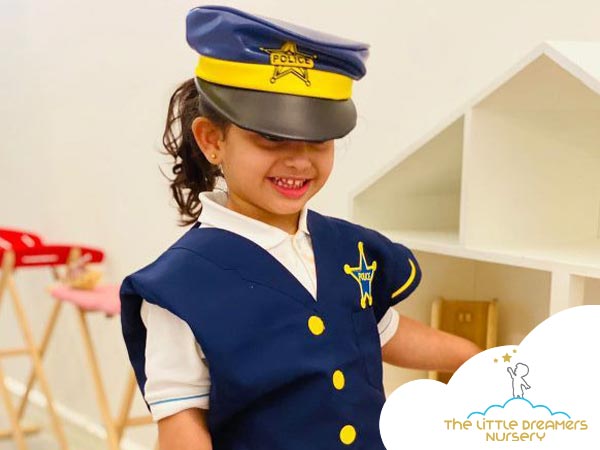
- Occupational: When children pretend to be police officers, doctors, nurses, teachers, or construction workers, they foster empathy amongst their peers. Imagining yourself in a high-profile position in society is a fun and helpful pastime for young people. As part of the benefits of role play activities, Early-years children naturally develop their communication and problem-solving abilities through occupational role-playing.
- Fantasy: Role-playing involves a lot of fantasy. Comic books and superhero characters that depict the good, the terrible, and even the ugliest are enthralling to children. Children learn the difference between right and wrong in the early years by playing out these character roles. While playing a role they love might inspire confidence and courage, it can also create new ideas and concepts. Youngsters need to participate in imaginative play with a group because it teaches them the importance of teamwork. In the early years of life, role-playing teaches children how to negotiate character roles, such as who is good or who is evil in a situation. Negotiation is frequently the only way they can get their first option, but they can find a workable solution by working together as a group.

Register now>>> our nursery winter camp in Dubai 2024
- Real-world Situations: As part of the benefits of role play for preschoolers, students in the early years learn about their immediate surroundings as they act out real-life scenarios like construction play. A child’s natural curiosity is stoked by the freedom to experiment, explore, and learn in a real-world setting. Children’s physical and verbal communication skills are honed through role-playing.
What do children learn in nursery
Benefits of role play
1-Evokes the Creative Spirit
According to recent studies, children’s creative thinking and cognitive flexibility are strongly enhanced as part of the benefits of role play. Imagination is a skill that must be developed as early as possible for children to imagine good books and grasp other points of view later in life. Imagination and creativity are the cornerstones when it comes to genius inventions, innovative cures, and cutting-edge technology. Our nursery activities in Dubai can build and improve the children’s imagination and creativity.
Read the full story here: 5 Important Benefits of Role Play in Early Childhood
Some useful links
- The Little Dreamers Nursery – Best Nursery in Dubai – Best Nursery in Jumeirah 3
- Nursery in Dubai – Fee Structure
- Nursery in Dubai – Nursery Camps
- Nursery in Dubai – Nursery Facilities
- Pottery Classes in Dubai – Nursery in Dubai
- Best Nursery in Jumeirah
- Jumeirah Golf Estates
- Best International Nursery Country Level 2024
- Nursery in Dubai – Career
- Nursery in Dubai - Curriculum
Art and craft in our British nursery in Dubai
Art and craft can develop skills such as creativity, decision making and critical thinking in the child. As the best nursery in Dubai, we emphasise the importance of teaching craft activities for preschoolers to your children and include art classes in their curriculum.
Fun easy art activities for toddlers
Our classes have considerable variety. From drawing and painting training to creating with natural resources. Art is fun and entertaining for most children. In addition to creating works of art, your children love to display their masterpieces in the nursery in Dubai. Art and craft education help children learn different skills through practical exercises.
Creative art activities for preschoolers
Teaching art to children is great for developing different skills. In the following, we will present different ways that art education is effective in developing different skills and personality traits of children. In our art activities for preschoolers lesson plans, we pay attention to all of the following so that your children can learn art in the best conditions.
The first positive effect of art activities for 3-4-year-olds is that they increase their creativity. Through art, children can better express their emotions and thoughts.
Art provides a natural and safe way for children to express themselves, where they can play, create and experiment in various ways, in which they can share with others.
- Improve academic performance in our nursery in Jumeirah
Art not only enhances children’s creativity but also strengthens their skills, which results in improved school performance.
Motor skills
Simple tasks such as holding a brush or drawing with a crayon play an important role in the development of children’s fine motor skills. During their art lessons, their fine motor skills are strengthened, which in turn helps to make learning to write easier.
Sensory and messy activities in our nursery
Why messy sensory play is important?
- Encouraging the child to explore and discover, allowing the child to know and perceive the world around them through their senses.
- Making neural connections in the brain
- Developing verbal skills
- Learning problem-solving skills
- Games and fun for your child
Sensory and messy play ideas
Sensory games to stimulate children’s five senses in our nursery in Jumeirah:
Cooking
We have designed different activities for your child to explain the sense of taste. Your children can cook freely in the nursery and cook whatever they like. All equipment is safe and your child is allowed to get messy and enjoy the experience. They can make crafts or draw with food such as pasta. Our nurses take good care of your children to experience sensory and messy activities in complete safety.
Playing with sand
If your child likes to play with sand and gravel on the beach, we have sand for them to explore with harmless materials that provide them with the pleasure of playing with sand at our nursery in Dubai.
Play with animals
To teach the children about animals, we explore and discuss all about animals with the children at our nursery. In our Indoor Forest, the children are encouraged to play with our Tortoise and can look at our lovely birds in their cage. We encourage the children to feed to Tortoise to help them to understand the importance of caring for animals.
Sowing seeds
We do a variety of planting activities at our nursery. Your children can watch their plants grow in the nursery and have opportunities to explore/play with soil in the garden.
Play with water
Children are very interested in playing with water. We have considered suitable places and toys for your children to explore with water. Your children will also begin to understand the meaning of hot and cold with special tactile games. We have many messy play ideas for your children.
Benefits of playing with loose parts in early childhood
Benefits of playing with loose parts in early childhood
Loose parts are interchangeable pieces that can teach multiple subjects
in various ways. You may also hear them referred to as tabletop toys.
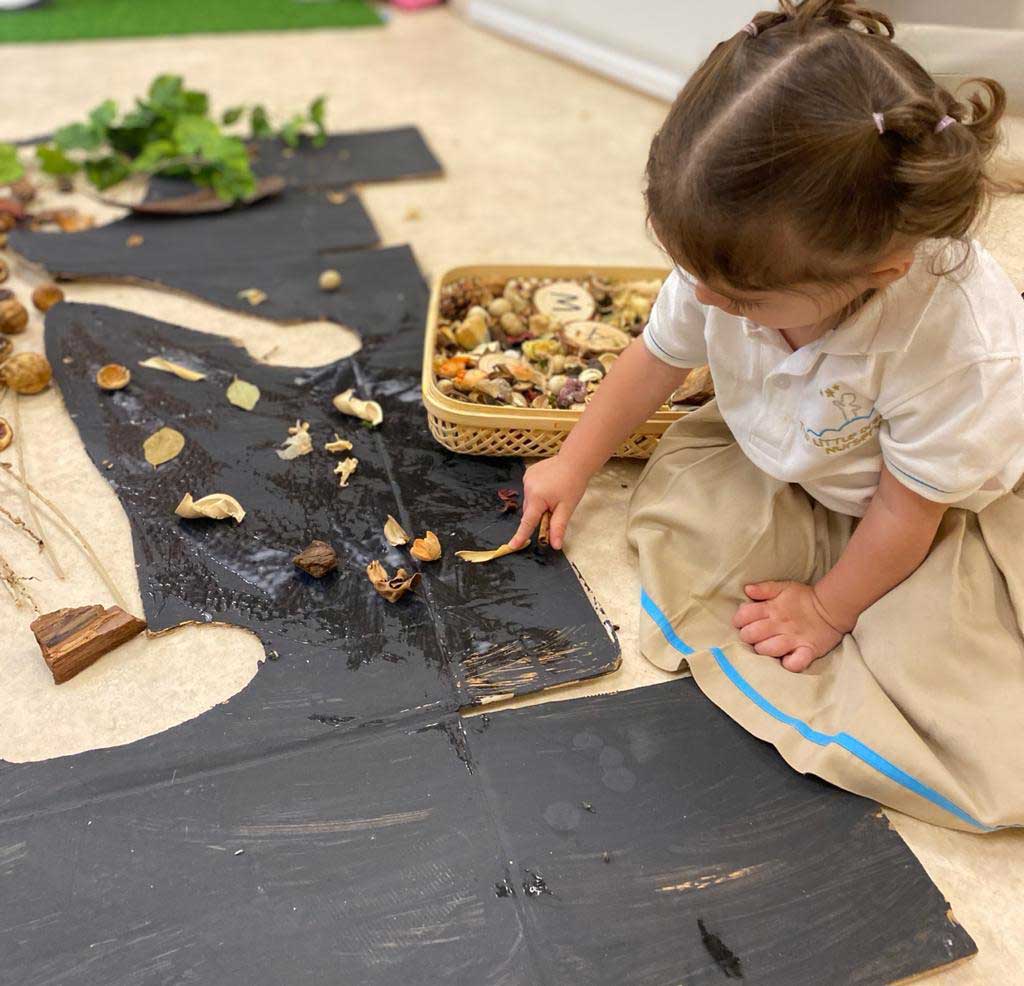
Natural items, repurposed items from the home or classroom, or we can
use items purchased primarily for the project for loose parts play. Let’s look at some advantages of playing with loose parts.
What does loose parts play mean for young children?
Examples of loose parts play activities include categorizing, sequencing, counting, stacking, matching, designing, and building. Young ones always rearrange the toys and play with them in new ways. Indoors, on surfaces like tables and floors, you can use loose components. Natural loose parts play could take place anywhere, from the ground to a picnic table.
Don’t miss: Benefits of role play article.
Why loose parts play is essential in early childhood?
Through loose parts play, children of all ages and stages foster curiosity, creativity, imagination, and invention. When there is no set way for children to play, they can explore, create, and invent in every sense of those terms because they assign their meanings to the toys they use.
What are the advantages of loose parts play?
Having fun with a bunch of random items can teach you a lot. The only difficulty in loose parts play is locating, sorting, and stowing the various components. Even though there are no predetermined outcomes for this form of play, it is crucial to go through any rules or standards for responsibly using the objects. Not all children are comfortable jumping right into play and creation; some need to see an adult model a few different options before they feel comfortable getting started. Adults can learn a lot from watching children play and asking questions like:
- What happened there?
- Why do you believe it looks like that?
- Is there anything you could change to see a different outcome?
Some of how loose parts play helps children grow and learn are listed below. We’ll also look at some loose parts play examples, too.
Inspire Children to Take Risks
When children have a run of good luck when playing with loose components, the good vibes they feel can spread to other areas of their lives. Children are less concerned with doing things “the correct way” during the day and are more likely to take chances during active outdoor play. This is one benefit of loose parts play.
Provide an Opportunity for Children to Learn Cause and Effect
Most children, after the toddler years, understand that if you push their block tower, it will collapse. And what about different stuff? They learn a new set of cause-and-effect pairs by experimenting with various objects in loose parts play. To illustrate this point, consider how much more difficult it would be to throw a wet pom-pom than a dry one.
Boost Independence and Confidence
Playing with loose components gives children more control over an activity, which can pave the way to increased autonomy in other areas of development. Having that sense of independence boosts one’s self-assurance.
Motivate Curiosity, Imagination, and Creativity
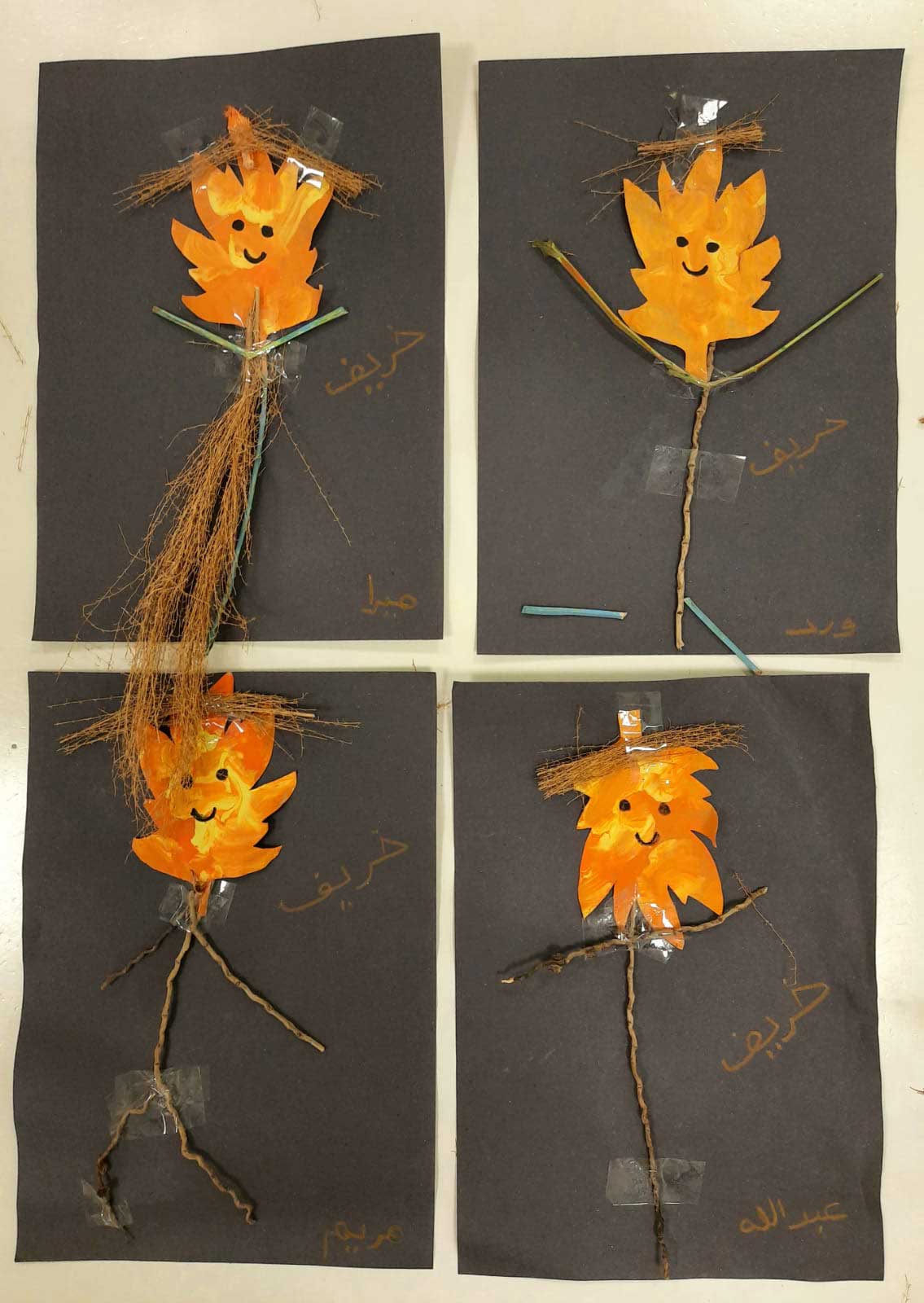
Many children’s toys are sold in collections with a specific order of play. That doesn’t give us much room to speculate. Because of the unstructured nature of loose components, children are free to experiment with “how things function,” use their creative energies to the fullest extent, and push themselves to their artistic potential.
Foster Analytical Thinking and Creative Problem Solving
Children can practice ideas at their developmental readiness while they engage in meaningful play with real-world objects. They speculate, try things out, evaluate the results, and try again. They can see that certain things slide or fly farther than others without understanding the concept of gravity.
Facilitate Cognitive Growth and Brain Development
Having the option to learn from a wide range of sources is crucial for developing critical thinking abilities. Children can practice a wide range of mathematical skills, from counting and sorting to comparing and sequencing, with the help of little movable pieces.
Boost Communication Abilities
Children’s communication is both vocal and nonverbal. They make up stories based on their observations and then ask the adults around them to confirm or disprove their suppositions.
Conclusion on loose parts play
Give loose parts play a try if you haven’t already. Using only a few inexpensive and readily available items as a starting point, it offers a brilliant and effective cure to the challenges faced by modern children. Children learn to take control of their education and the future. In our nursery in Dubai, we teach your children loose parts play in the correct way and try to establish proper behaviors and future life skills through this type of playing.
Book a tour now to visit The Little Dreamers Nursery one of the best Dubai nurseries.
Source: Benefits of playing with loose parts in early childhood